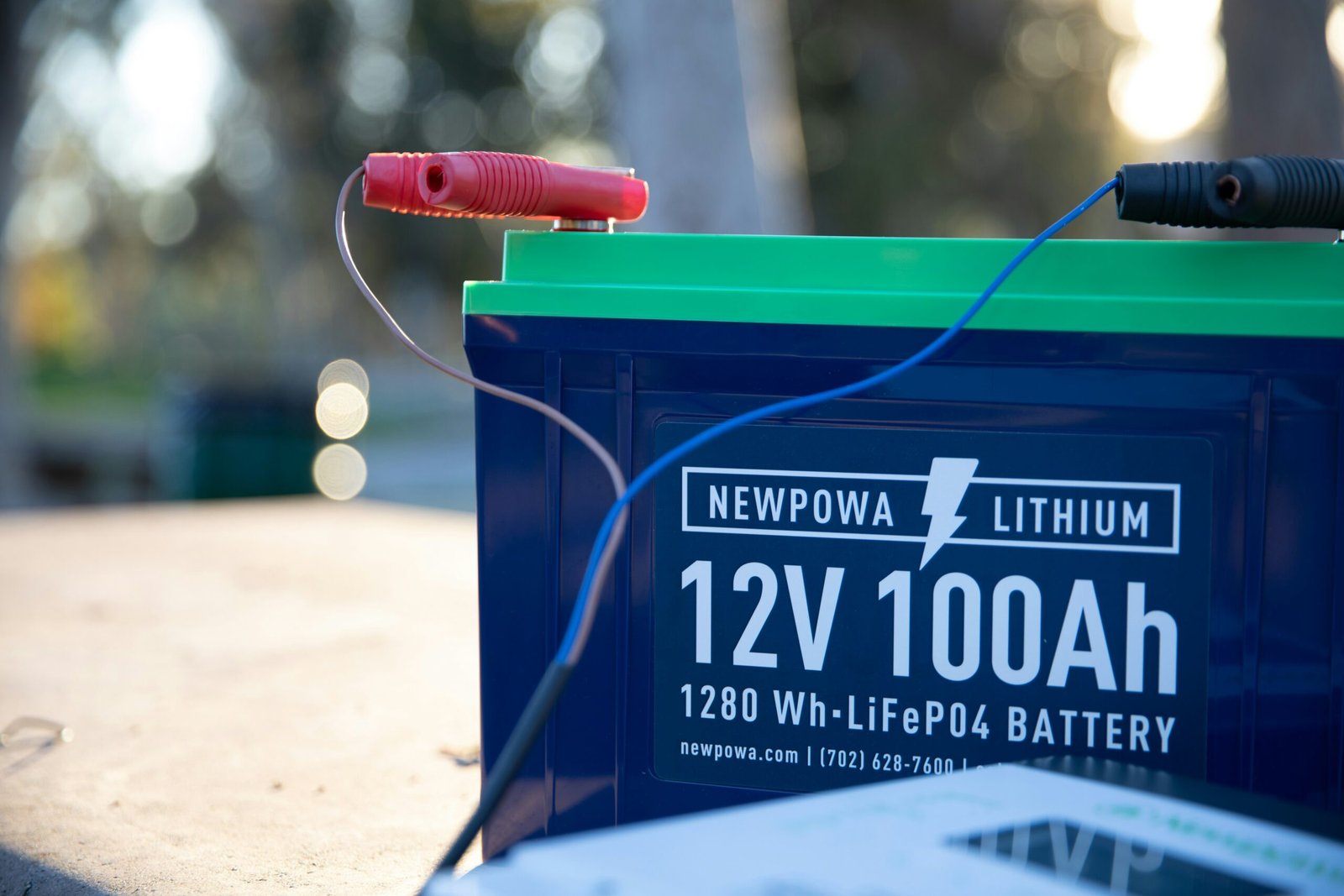
CE marking for battery products 2026
CE Marking for Battery Products 2026: The Complete Compliance Guide
If you are placing battery products on the EU market in 2026, you are operating in one of the most rapidly evolving regulatory environments in recent memory. The EU Battery Regulation (EU) 2023/1542 — which replaced the old Battery Directive 2006/66/EC — has been phasing in requirements since August 2023, and 2026 marks a critical year when several significant obligations come into full effect. Whether you manufacture portable batteries, industrial battery systems, EV traction packs, or consumer electronics containing batteries, this guide walks you through the applicable legislation, conformity assessment routes, technical documentation requirements, labelling rules, and the practical steps your team needs to take before placing a product on the EU market. Read this carefully: the penalties for non-compliance include market withdrawal, fines, and reputational damage that can be extremely difficult to recover from.
1. The Regulatory Landscape: What Changed and Why It Matters
The cornerstone of EU battery compliance in 2026 is Regulation (EU) 2023/1542 on batteries and waste batteries. Unlike its predecessor — Directive 2006/66/EC, which required transposition into national law — this instrument is a Regulation, meaning it applies directly and uniformly across all 27 EU member states without any national implementation gap. That uniformity matters enormously for pan-European market strategies.
From Directive to Regulation: The Structural Shift
The old Battery Directive focused primarily on waste management and hazardous substance restrictions. The new Battery Regulation is vastly broader in scope. It addresses sustainability, safety, labelling, due diligence in supply chains, electronic information through battery passports, and end-of-life obligations — all in a single, directly applicable legal instrument. For compliance practitioners, this means that the national transposition quirks that used to complicate cross-border compliance are largely eliminated, but the depth of obligation is considerably greater.
Interaction with Other EU Legislation
Battery products do not sit in a regulatory vacuum. Depending on the application, your battery product may simultaneously fall under the Low Voltage Directive 2014/35/EU (LVD) if it operates between 50V AC and 1000V AC (or 75V DC to 1500V DC), the Radio Equipment Directive 2014/53/EU (RED) if radio functionality is integrated, the Machinery Regulation (EU) 2023/1230 if batteries are incorporated into machinery, the Ecodesign Regulation (EU) 2024/1781, and the General Product Safety Regulation (GPSR) (EU) 2023/988 which became fully applicable from December 2024. Mapping the correct combination of applicable legislation is the first and arguably most important step in any compliance project.
2. Battery Categories Under EU 2023/1542 and Their 2026 Obligations
The Battery Regulation classifies batteries into five categories, and the obligations that apply — including CE marking requirements — differ significantly between them. Getting your category classification right from the outset is essential.
Portable Batteries
Portable batteries are sealed, weighing not more than 5 kg, not designed for industrial use, and not electric vehicle or light means of transport batteries. This category includes the AA, AAA, and lithium coin cells found in everyday consumer products, as well as the cylindrical and pouch cells in laptops and power tools. CE marking under the Battery Regulation applies to portable batteries, and from 18 August 2026, minimum recycled content requirements begin to apply to portable batteries containing cobalt, lead, lithium, or nickel, though the specific thresholds escalate on a longer timeline through 2030 and beyond.
Light Means of Transport (LMT) Batteries
This is a category introduced by the 2023 Regulation that did not exist in the old Directive. LMT batteries power electric bicycles, e-scooters, electric mopeds, and similar light vehicles. They weigh 5 kg or less. From a CE marking perspective, LMT batteries must carry a CE mark, and from 18 August 2026, the carbon footprint declaration requirement applies to LMT batteries — manufacturers must calculate and declare the carbon footprint of the battery over its lifecycle, following the methodology specified in delegated acts adopted under Article 7 of the Regulation.
Industrial Batteries
Industrial batteries are designed exclusively for industrial use, weigh more than 5 kg, and are not EV or LMT batteries. Large stationary energy storage systems (BESS) fall here. CE marking is required. The carbon footprint declaration obligation for industrial batteries with a capacity above 2 kWh came into force on 18 August 2024, making many industrial battery manufacturers already familiar with that particular process.
Electric Vehicle (EV) Batteries
EV batteries power on-road electric vehicles as defined in Regulation (EU) 168/2013 and Regulation (EU) 2018/858. These are among the highest-scrutiny products in the Regulation, with CE marking, carbon footprint declarations, recycled content requirements, and battery passport obligations. The battery passport requirement — a digital record accessible via a QR code — becomes mandatory for industrial batteries above 2 kWh and EV batteries from 18 February 2027, though preparatory work must begin now.
Starting, Lighting, and Ignition (SLI) Batteries
Traditional automotive starter batteries fall into this category. CE marking applies, and SLI batteries are subject to the recycled content requirements and end-of-life obligations, though the carbon footprint and battery passport obligations apply on a later timeline compared to EV and industrial batteries.
3. CE Marking Requirements: The Conformity Assessment Process
CE marking under the Battery Regulation signals that the product meets the essential requirements set out in Annexes I through VIII of the Regulation. The process for achieving and affixing a CE mark involves a series of defined steps that must be followed methodically.
Step 1: Determine Applicable Essential Requirements
Annex I of the Battery Regulation sets out the performance and durability requirements; Annex II specifies hazardous substance restrictions (including restrictions on mercury, cadmium, and lead in specific battery types); Annex III covers labelling and marking requirements including the CE mark itself, capacity labels, and the “separate collection” wheeled bin symbol. Before you can design a testing programme or begin drafting technical documentation, you must identify which Annexes apply in full to your specific battery category and intended use.
Step 2: Apply Harmonised Standards
Harmonised standards published in the Official Journal of the EU under the Battery Regulation provide a presumption of conformity with the essential requirements they cover. As of mid-2025, the European standardisation bodies CEN and CENELEC are developing a suite of harmonised standards under the new Regulation. In the interim, manufacturers are using a combination of legacy EN standards, IEC standards with presumption of conformity arguments, and CENELEC technical specifications. Key standards to monitor include EN IEC 62133-2 for safety requirements of portable sealed secondary lithium cells and batteries, EN 50604-1 for secondary lithium batteries for light electric vehicle applications, IEC 62619 for industrial lithium battery safety, and EN 50342-1 for lead-acid starter batteries. Always verify the current list on the Official Journal; harmonised standards lists change and using a standard that is no longer listed does not give you presumption of conformity.
Step 3: Conformity Assessment Module
The Battery Regulation specifies conformity assessment procedures in Article 17 and Annex VIII. For most battery categories, manufacturers may use internal production control (Module A) — meaning a self-declaration route — provided they apply harmonised standards and can demonstrate full coverage of all essential requirements through internal testing and documentation. Where harmonised standards do not exist or do not fully cover the essential requirements, manufacturers must use Module B (EU-type examination by a Notified Body) followed by Module C2, D, E, or F. Practically speaking, for novel battery chemistries or applications where harmonised standards coverage is incomplete, Notified Body involvement is the safer and more defensible route.
Step 4: Technical Documentation
Technical documentation must be compiled before the CE mark is affixed and must be retained for at least 10 years after the last battery is placed on the market. The documentation must be sufficient to demonstrate conformity with all applicable essential requirements. It must include a general description of the battery and its intended use, conceptual design and manufacturing drawings, a list of harmonised standards applied (with references to OJ publications), results of design calculations and examinations, test reports, the EU Declaration of Conformity, and — for batteries subject to carbon footprint obligations — the carbon footprint declaration and supporting data. For battery passport-required products, documentation must include the information that will populate the battery passport, structured according to the delegated act on battery passport implementation.
Step 5: EU Declaration of Conformity
The EU Declaration of Conformity (DoC) is a legally binding document signed by a responsible person within your organisation (typically a director or authorised representative). It must contain specific elements defined in Annex IX of the Battery Regulation, including the manufacturer’s name and address, a description of the battery sufficient to enable unambiguous identification, a statement that the battery conforms to the relevant EU legislation, a reference to the harmonised standards or other technical specifications applied, the name and identification number of any Notified Body involved, and a legally binding signature. If your battery falls under multiple directives or regulations simultaneously, you may produce a single combined Declaration of Conformity covering all applicable legislation — this is common practice and preferred for clarity.
Step 6: Affix the CE Marking
The CE marking must be affixed visibly, legibly, and indelibly to the battery or, where the size or nature of the battery does not permit this, to its packaging and to the documentation accompanying the battery. The minimum height of the CE marking is 5mm. If a Notified Body is involved in the conformity assessment procedure, their four-digit identification number must appear immediately after the CE mark. Under no circumstances should CE marking be affixed before the technical documentation is complete and the DoC is signed.
4. The Carbon Footprint Declaration: A 2026 Priority
The carbon footprint declaration is one of the most operationally demanding new obligations under the Battery Regulation, and for LMT batteries, the clock is ticking hard for 2026. Understanding what is required and how to approach it is essential for any manufacturer in this space.
What the Carbon Footprint Declaration Must Include
Pursuant to Article 7 and delegated acts adopted thereunder, the carbon footprint declaration must cover the entire lifecycle of the battery from raw material extraction through manufacturing, transport, use, and end-of-life. The calculation methodology is based on the Product Environmental Footprint Category Rules (PEFCR) for rechargeable batteries, adapted by EU delegated acts. The declaration must specify the total lifecycle carbon footprint expressed as kilograms of CO2 equivalent per kilowatt-hour of total energy throughput of the battery, alongside a breakdown by lifecycle stage. It must be linked to a QR code on the battery label that provides access to the digital record.
Practical Steps for Carbon Footprint Compliance
Begin by mapping your supply chain in detail — this is not optional. You need primary data from your key suppliers for the materials and components with the highest carbon footprint contributions (typically cathode active materials, cell manufacturing energy, and pack assembly). Where primary data is unavailable, the delegated act specifies which secondary datasets (such as the ecoinvent database or GREET model) may be used as fallbacks, but primary data use is incentivised because it ultimately determines which performance class your battery achieves. Performance classes — from best to worst — will determine EU procurement preferences and eventually market access thresholds once the maximum carbon footprint limits under Article 7(4) come into force, anticipated around 2027 for most categories.
5. Labelling Requirements in 2026
Battery labelling under the new Regulation is substantially more information-rich than under the old Directive, and non-compliant labelling is one of the most common reasons for market surveillance action.
Mandatory Label Elements
All batteries must bear the CE marking, the manufacturer’s name and registered trademark or trade name, the battery model identifier, the batch or serial number enabling traceability, the rated capacity in ampere-hours (Ah) for portable batteries or watt-hours (Wh) for other categories, the chemical composition of the battery (as defined in the applicable delegated act), the wheeled bin symbol indicating separate collection obligation, the QR code providing access to the battery passport or electronic information record, and — for batteries subject to the carbon footprint obligation — the performance class and carbon footprint value. Batteries containing more than 0.002% by weight of cadmium must also bear the Cd chemical symbol; batteries containing more than 0.004% by weight of lead must bear the Pb symbol.
Language and Legibility Requirements
Label information must be in the official language(s) of the member state(s) where the battery is placed on the market. For batteries sold across multiple member states, this typically means a multilingual label or multiple national labels. The font size and contrast must be sufficient to ensure legibility under normal conditions of use — market surveillance authorities have taken action against products where label text, while technically present, was printed in such small type as to be effectively illegible.
6. Economic Operator Obligations: Manufacturers, Importers, and Distributors
The Battery Regulation places specific and differentiated obligations on different economic operators in the supply chain. Understanding where your organisation sits in that chain — and what your specific obligations are — is non-negotiable.
Manufacturers
Manufacturers bear the primary compliance burden. They must ensure batteries are designed and manufactured in conformity with the essential requirements, compile and maintain technical documentation, carry out or commission the conformity assessment, draw up the DoC, affix the CE marking, register the battery in the EU Battery Passport system when applicable, ensure traceability through batch or serial numbering, and take corrective action and inform authorities if a battery placed on the market is subsequently found to be non-conforming. Manufacturers established outside the EU must appoint an authorised representative established in the EU who can be held legally accountable. This is not a procedural formality — the authorised representative must have access to the technical documentation and DoC, and must cooperate with market surveillance authorities.
Importers
Importers — organisations established in the EU that place batteries from third countries on the EU market — must verify before placing a product on the market that the manufacturer has carried out the conformity assessment, that the technical documentation has been drawn up, that the battery bears the CE marking and required labels, and that the manufacturer has appointed an authorised representative if required. Importers must keep a copy of the DoC for 10 years and ensure that storage and transport conditions do not jeopardise conformity. Under the GPSR and General Product Safety framework, importers may also bear additional product safety obligations.
Distributors
Distributors must verify that the battery bears the CE marking, the required accompanying documentation, and the manufacturer’s and importer’s details. They must not place products on the market that they believe to be non-conforming and must cooperate with market surveillance authorities in any investigation. Where distributors modify the battery or place it on the market under their own name or trademark, they assume the obligations of the manufacturer.
7. Due Diligence and Sustainability: Supply Chain Obligations
One of the most significant and operationally novel aspects of the Battery Regulation compared to all previous EU product regulation is its mandatory supply chain due diligence requirement, set out in Article 48 and Annex X, which applies to economic operators placing industrial batteries above 2 kWh, LMT batteries, SLI batteries, and EV batteries on the market with a turnover above €40 million.
What Due Diligence Requires
Qualifying operators must adopt and implement a management policy for responsible sourcing of cobalt, natural graphite, lithium, nickel, and related raw materials. This means establishing and communicating a company-wide due diligence policy for the supply chain covering those materials, identifying actual and potential adverse impacts in the supply chain (including human rights abuses, conflict financing, and environmental harm), developing a risk management plan to respond to identified risks, engaging in third-party verification by an accredited verifier, and reporting annually on supply chain due diligence policies and practices. The due diligence obligation under the Battery Regulation overlaps with the EU Corporate Sustainability Due Diligence Directive (CSDDD) for larger operators — you should assess both instruments together rather than treating them as entirely separate compliance workstreams.
8. Market Surveillance, Enforcement, and Practical Risk Management
Understanding how market surveillance operates in practice is essential for building a defensible compliance programme rather than a paper compliance programme.
How Market Surveillance Works in the EU
Market surveillance authorities (MSAs) in each member state — typically the national standardisation and metrology authorities, or consumer safety agencies — conduct both proactive and reactive market surveillance. Proactive surveillance involves random sampling and testing of products available on the market, including products purchased via online marketplaces. Reactive surveillance is triggered by complaints, border control findings, or notifications in the RAPEX/Safety Gate rapid alert system. If an MSA finds that a battery product does not conform to the Battery Regulation, they can order the economic operator to bring the product into conformity, restrict or prohibit the product’s availability on the market, organise a recall, order destruction of the product, and impose financial penalties in accordance with national law — which in many member states are substantial.
Building a Defensible Compliance Programme
A technically sound compliance programme is your primary defence in any market surveillance interaction. Maintain your technical documentation rigorously and keep it current — do not allow it to become a one-time exercise that is filed away and forgotten. Establish an internal procedure for monitoring harmonised standards updates and regulatory amendments, because the Battery Regulation’s delegated act programme means there will be significant new requirements published regularly through 2026 and beyond. Conduct periodic internal compliance audits and, for high-risk product lines, commission third-party compliance audits from qualified experts. Ensure that your authorised representative relationship is substantive rather than nominal — they must actually be in a position to respond to authority requests within the required timeframes.
Summary
CE marking for battery products in 2026 is a multi-layered obligation governed primarily by Regulation (EU) 2023/1542, with intersecting obligations under the LVD, RED, GPSR, and other applicable legislation depending on the battery’s application. The key 2026 milestones are the carbon footprint declaration requirements for LMT batteries, the continued phase-in of recycled content obligations, and the preparatory work required for battery passport readiness ahead of the February 2027 deadline. The conformity assessment process — identifying essential requirements, applying harmonised standards, compiling technical documentation, issuing a DoC, and affixing the CE mark — remains the procedural backbone of compliance, but it now sits within a much richer regulatory environment that also demands supply chain due diligence, detailed labelling, and ongoing market surveillance vigilance. Economic operators at every tier of the supply chain bear specific and legally binding obligations. Start your compliance projects early, engage qualified experts, and treat your technical documentation as a living, maintained asset rather than a one-time exercise.
Frequently Asked Questions
Q1: Does every battery sold in the EU need a CE mark in 2026, regardless of size or chemistry?
CE marking is required for batteries falling within the scope of Regulation (EU) 2023/1542, which covers all batteries placed on the EU market including portable, LMT, industrial, EV, and SLI batteries. There is no general exemption based on small size or specific chemistry, though the specific essential requirements and conformity assessment routes vary by category. Batteries that are integral to a finished product (such as a sealed-in phone battery) are subject to the Battery Regulation’s requirements, and the manufacturer of the finished product bears responsibility for ensuring those requirements are met. Primary (non-rechargeable) batteries also fall within the scope of the Regulation and require CE marking, though some of the more extensive obligations (such as carbon footprint declarations) currently apply only to rechargeable categories.
Q2: Can a non-EU manufacturer sell batteries directly to EU customers without an authorised representative?
No. Under Article 38 of Regulation (EU) 2023/1542, a manufacturer established outside the EU must appoint an authorised representative established in the EU before placing batteries on the EU market. This also applies to online direct-to-consumer sales targeting EU customers. The authorised representative must be designated by a written mandate, must have access to the DoC and technical documentation, and must be able to cooperate with and respond to requests from market surveillance authorities. Simply listing an EU address on product packaging without a genuine authorised representative relationship is not sufficient and exposes the business to serious enforcement risk.
Q3: What is a battery passport and when does my product need one?
The battery passport is a digital record associated with each battery model (or, for some categories, each individual battery unit) that contains information about the battery’s composition, carbon footprint, supply chain due diligence, recycled content, and other regulatory data. It is accessible via a QR code or data carrier on the battery label and is stored in a system interoperable with the EU Battery Passport platform being established by the European Commission. Under the Battery Regulation, the battery passport requirement applies to industrial batteries with a capacity above 2 kWh and all EV batteries from 18 February 2027. LMT battery passport requirements are expected to follow on a delegated act timeline. Manufacturers should begin building the data infrastructure and supply chain data collection processes required for battery passport compliance now, as the underlying data requirements — particularly supply chain and carbon footprint data — require significant lead time to establish reliably.
Q4: How do harmonised standards under the Battery Regulation work in 2026, given that many standards are still being developed?
This is one of the most practically challenging aspects of battery compliance in 2026. The European Commission issued a standardisation request to CEN and CENELEC to develop harmonised standards under the Battery Regulation, but the development and OJ publication process takes time. In the interim, manufacturers have three main options. First, they may use existing harmonised standards published under earlier legislation (such as standards harmonised under the LVD or RED) where those standards’ scope and coverage are relevant and demonstrably cover the essential requirements of the Battery Regulation. Second, they may use international standards (IEC, ISO) that are not formally harmonised but can support a manufacturer’s conformity assessment with appropriate justification documented in the technical file — this does not provide a formal presumption of conformity but does constitute recognised technical evidence. Third, for requirements not covered by any existing standard, manufacturers must develop and document their own technical solution and justify its adequacy in the technical documentation, typically supported by third-party testing. Monitor the Official Journal regularly for new harmonised standards publications, as the position will evolve significantly during 2026.
Q5: What are the penalties for placing non-compliant batteries on the EU market in 2026?
The Battery Regulation requires member states to establish penalties for infringements and to ensure they are effective, proportionate, and dissuasive, but it leaves the specific penalty levels to national law. In practice, penalties vary significantly by member state. Germany, France, and the Netherlands — among the largest EU markets — have established substantial administrative fines for product safety and CE marking infringements, with fines for serious violations potentially reaching hundreds of thousands of euros in some jurisdictions. Beyond financial penalties, market surveillance authorities can order product recalls, require destruction of non-compliant stock, suspend market authorisation, and publish enforcement decisions — all of which carry significant reputational and commercial consequences. Repeat or deliberate non-compliance, particularly where safety risks are involved, can lead to criminal liability for company officers in some member states. The cost of compliance is always lower than the cost of non-compliance enforcement.
Q6: Does the Battery Regulation affect batteries that are imported as part of a finished product (for example, a power tool with a built-in lithium battery)?
Yes, and this is an area where compliance practitioners sometimes underestimate their obligations. When a battery is incorporated into a finished product, the Battery Regulation’s requirements apply to the battery itself — not just to the finished product. The manufacturer of the finished product (or the importer, if the product is manufactured outside the EU) bears responsibility for ensuring that the incorporated battery meets all applicable Battery Regulation requirements, including essential requirements, labelling, and — where applicable — carbon footprint declarations. The CE mark on the finished product under the applicable product directive (for example, the LVD or Machinery Regulation) does not substitute for Battery Regulation compliance. You must be able to demonstrate, through your technical documentation, that the battery incorporated in your finished product is separately compliant with the Battery Regulation. This typically requires obtaining appropriate technical documentation and declarations from your battery supplier and conducting a gap assessment against the Battery Regulation’s essential requirements.
Professional Compliance Resource
Complete CE marking toolkit — technical documentation checklist, DoC template, harmonised standards list.
Professional Compliance Resource
DirectiveBase CE Marking Bundle
All 5 compliance kits in one download — CE Marking, DoC Pack, EMC Directive, LVD, and Machinery Directive.
€455 value → €297 — save €158